Technical Discussion: Attributes of Ancient Egyptian Hard Stone Vases
1. Introduction and Scope
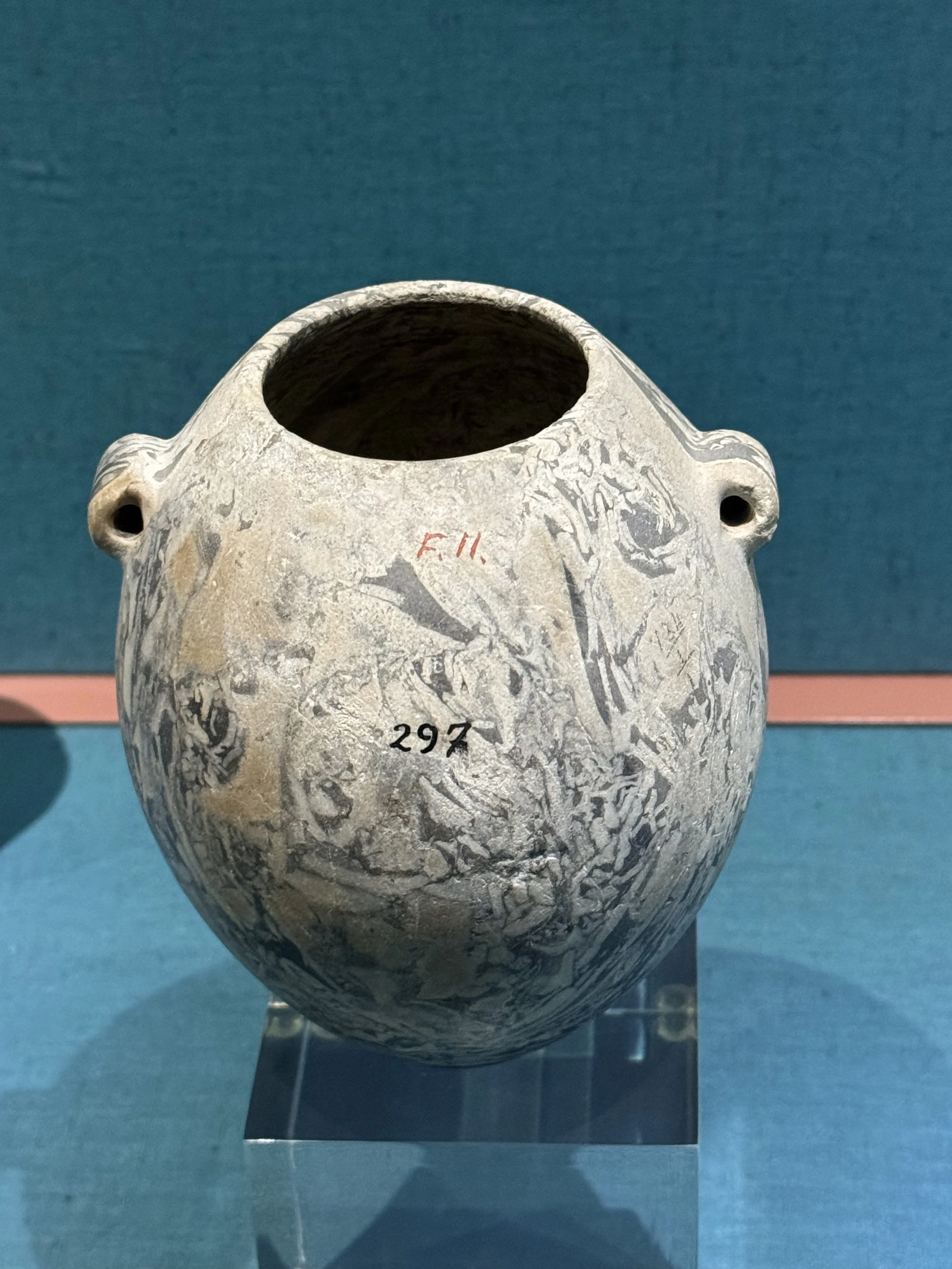
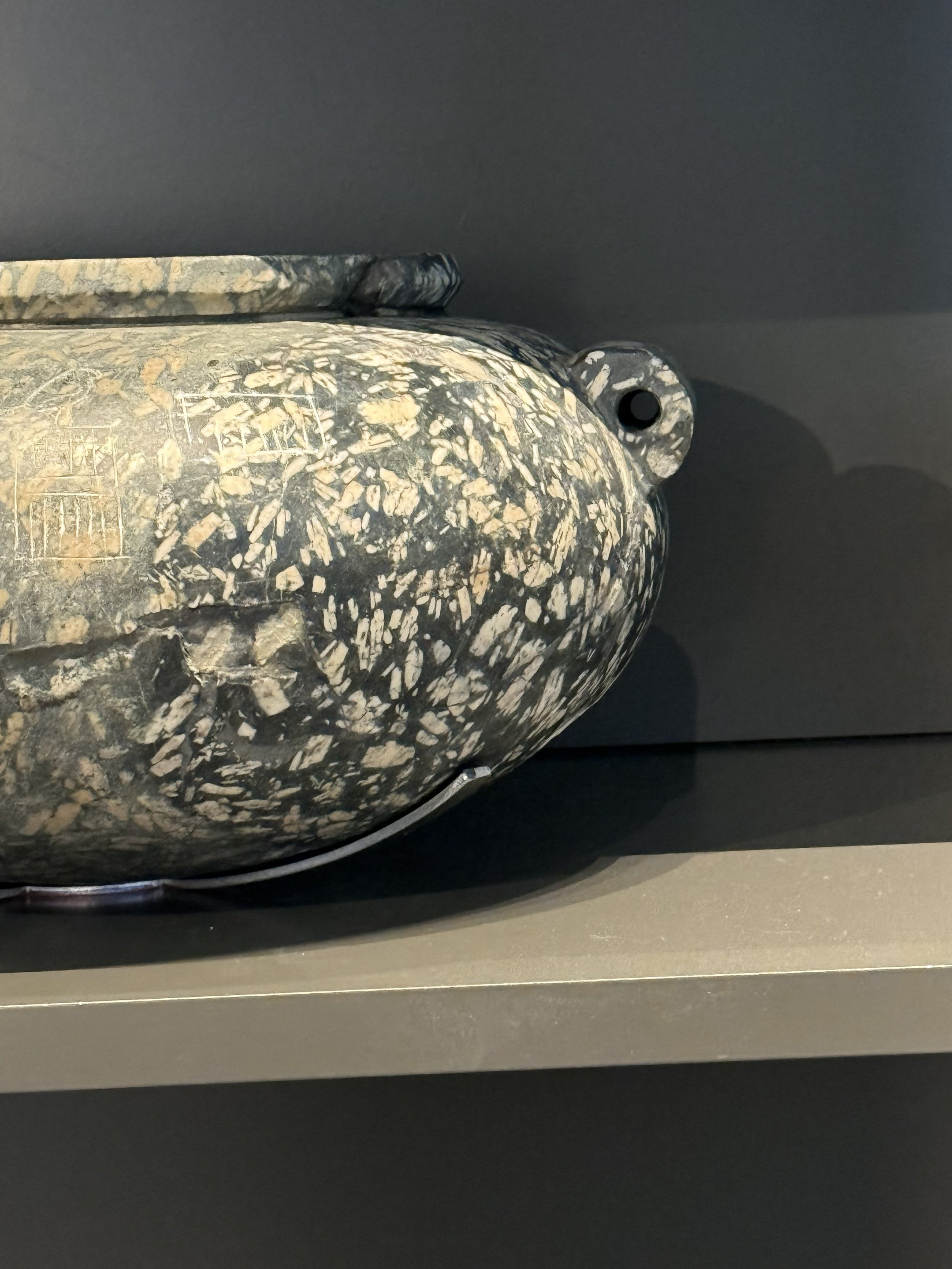
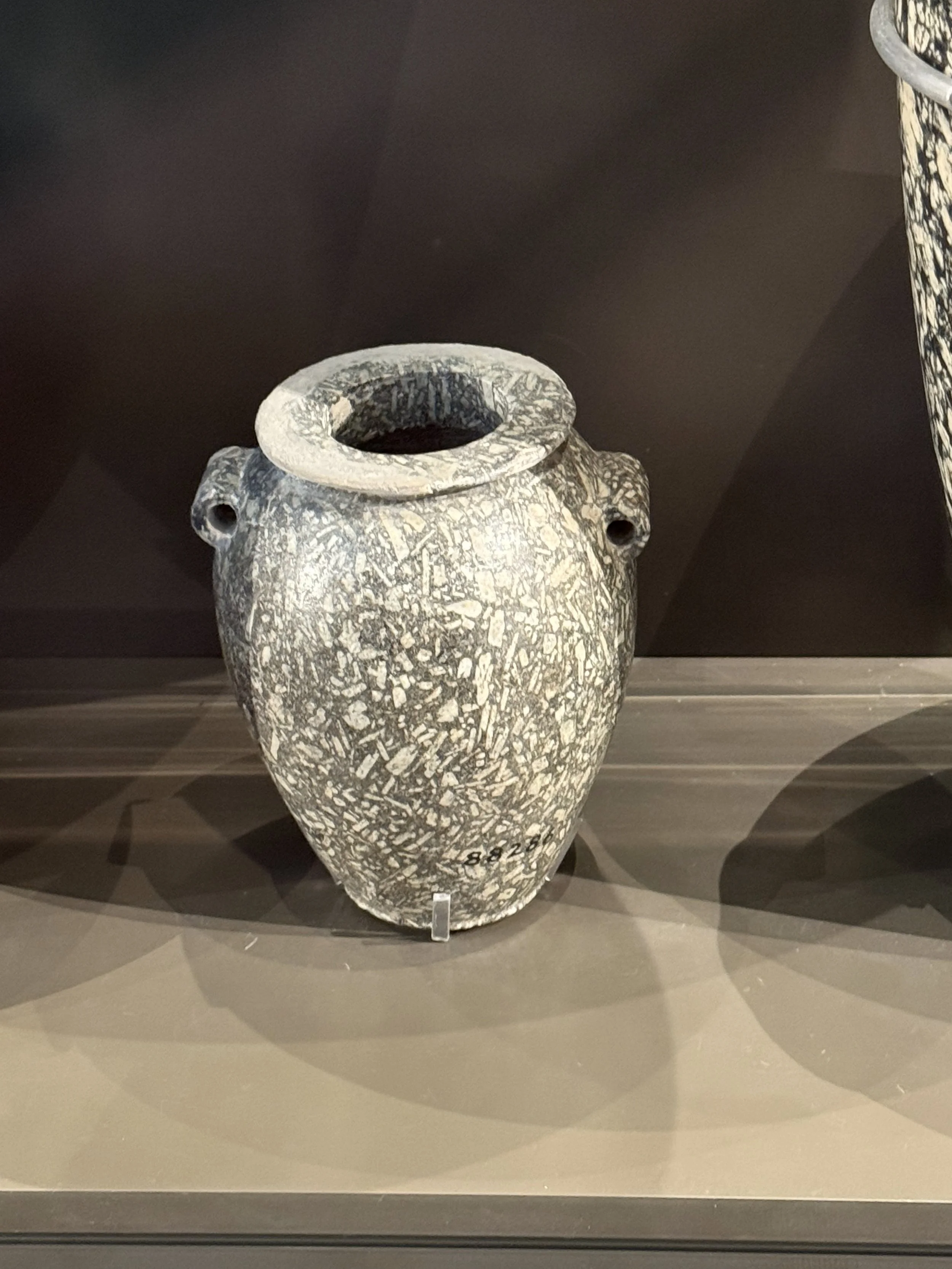
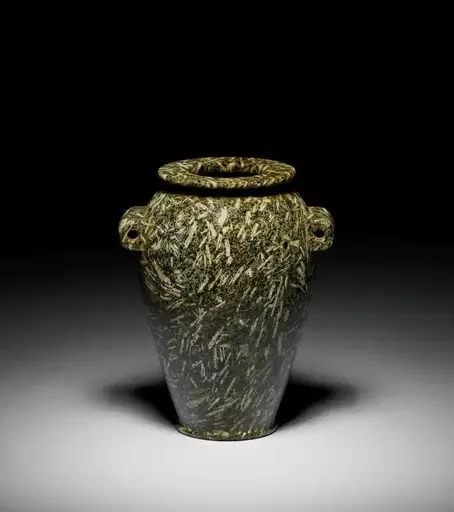
Ancient Egyptian hard stone vessels represent one of the most technically challenging artefact classes from the early dynastic period. Found primarily in predynastic contexts and early royal tombs, including those at Saqqara associated with the reign of Djoser, these vessels are frequently carved from materials such as granite, diorite, basalt, schist, and porphyry. These stones possess mechanical properties that present significant resistance to shaping using conventional hand tools, particularly those assumed to be available during the fourth and third millennia BCE.
This discussion focuses on the physical and technical attributes of these vessels, with particular attention to symmetry, surface finish, internal geometry, tool mark morphology, and material selection. The analysis draws on published measurements, high resolution scans, photographic documentation, and comparative experimental work presented by independent researchers and digital archivists. Emphasis is placed on observable evidence rather than speculative reconstruction, with the aim of characterising what the artefacts demonstrate materially, regardless of how their manufacture is ultimately explained.
2. Material Properties and Selection
2.1 Stone Types Used
The vessels under discussion are frequently carved from igneous and metamorphic stones with Mohs hardness values ranging from approximately 6 to 7. Granite, composed primarily of quartz, feldspar, and mica, presents particular challenges due to the hardness of quartz inclusions and the heterogeneity of the crystalline structure. Diorite and granodiorite exhibit similar resistance to abrasion and cutting. Basalt, while fine grained, also possesses high compressive strength and fracture toughness.
The selection of these materials suggests intentional choice rather than convenience. Softer stones such as limestone and alabaster were widely available and extensively used for architectural and sculptural purposes. Their relative absence in early dynastic vessel assemblages indicates that hardness was not avoided and may have been sought for symbolic, functional, or technical reasons.
2.2 Implications of Hard Stone Working
Working stone of this hardness requires either prolonged abrasive action, significant force concentration, or tooling capable of maintaining sharp cutting edges against quartz-rich matrices. Experimental archaeology using copper tools with quartz sand abrasives has demonstrated feasibility for shaping granite, but at time scales that increase dramatically with precision demands. The degree of refinement observed in many vessels therefore raises questions about the efficiency and repeatability of the methods employed.
3. Geometric Symmetry and Axial Alignment
3.1 External Symmetry
Many hard stone vases exhibit rotational symmetry around a central vertical axis. This symmetry is evident not only visually but also in dimensional measurements taken at multiple angular orientations. Digital scans reveal consistent radial distances from the axis at corresponding heights, indicating a controlled shaping process rather than freehand carving.
In some examples, deviations from perfect symmetry are measurable but minimal, often within fractions of a millimetre. These tolerances are notable given the hardness of the material and the absence of documented precision measurement tools from the period.
3.2 Internal Geometry
Perhaps more striking is the internal geometry of hollowed vessels. Internal cavities frequently mirror the external profile, maintaining consistent wall thickness over curved surfaces. This is particularly evident in vessels with narrow necks and bulbous interiors, where access for manual tools would be limited.
Measurements of wall thickness in scanned examples show variations that are often gradual and symmetrical, rather than irregular. This suggests intentional control of material removal rather than opportunistic hollowing.
4. Surface Finish and Polish
4.1 External Surfaces
The external surfaces of many vessels display a high degree of smoothness, with reflective qualities approaching polish. Under magnification, surfaces often appear continuous, with minimal evidence of chipping or uncontrolled fracture. This level of finish requires sustained abrasive action using progressively finer media.
The uniformity of finish across curved surfaces further implies systematic motion rather than localised rubbing. Experimental replication has shown that achieving such finishes by hand is possible but labour intensive, particularly on hard stone.
4.2 Internal Surfaces
Internal finishes are often comparable in smoothness to external surfaces, even in areas that would be difficult to reach directly. This observation suggests the use of tools or processes capable of conforming to internal geometries while maintaining consistent contact pressure.
In some vessels, concentric striations are visible on internal walls, forming circular patterns aligned with the central axis. These marks are consistent with rotary motion during hollowing or finishing.
5. Tool Marks and Manufacturing Traces
5.1 Concentric Striations
One of the most frequently cited technical attributes of these vessels is the presence of concentric tool marks on internal and external surfaces. These marks appear as evenly spaced circular lines, sometimes overlapping, that follow the circumference of the vessel.
Such striations are indicative of rotational movement between the tool and the workpiece. Whether the vessel rotated relative to a fixed tool or vice versa cannot be determined solely from the marks, but the regularity suggests controlled motion.
5.2 Linear Grooves and Abrasion Patterns
In addition to circular striations, some vessels exhibit linear grooves or parallel abrasion marks. These may represent earlier stages of material removal prior to finishing or the use of different tools for roughing and smoothing.
The depth and spacing of these marks vary between vessels, implying variation in tool geometry or abrasive size. In certain cases, grooves appear too regular to be the result of random hand movement, reinforcing interpretations involving guided motion.
6. Drilling and Hollowing Techniques
6.1 Evidence of Core Drilling
Some hard stone vessels show evidence consistent with tubular drilling. Circular impressions, internal cores, and cylindrical cavities have been documented in both vessels and associated stone artefacts. These features suggest the use of hollow drills with abrasive slurry.
The diameter consistency of drilled sections within individual vessels supports the use of rigid drilling implements rather than improvised tools. Experimental work has demonstrated that copper tubes with abrasive slurry can drill granite, but at slow rates and with significant tool wear.
6.2 Depth and Control
The depth of drilled cavities in some vessels is substantial relative to their diameter, requiring sustained alignment and pressure. Deviations in drilling angle are minimal in many examples, indicating careful control.
Where drilling transitions into broader hollowing, surfaces often blend smoothly, suggesting integration of multiple techniques within a single manufacturing sequence.
7. Wall Thickness Consistency
7.1 Measurement Data
High resolution scans and caliper measurements of vessel walls reveal consistent thickness around the circumference and along the vertical axis. Variations are often symmetrical, such as gradual thickening toward the base or lip.
In thin walled examples, thickness can be remarkably uniform, sometimes measuring only a few millimetres in hard stone. Achieving such consistency without breaching the wall requires precise control of material removal.
7.2 Implications for Process Control
Consistent wall thickness implies either continuous measurement during production or a process that inherently limits deviation. Rotary shaping methods naturally produce symmetry but do not guarantee thickness control unless combined with depth limitation or feedback.
This observation supports interpretations involving iterative checking, template use, or tooling that constrained depth.
8. Standardisation and Repetition
8.1 Similar Forms Across Assemblages
Many vessel forms recur across different sites and time periods, with similar proportions and profiles. This repetition suggests established design conventions rather than ad hoc creation.
Standardisation implies transmission of technical knowledge and possibly specialised production roles. It also raises the possibility of workshop environments where techniques were refined and shared.
8.2 Implications for Skill and Training
The consistency of form and finish across multiple examples suggests that high levels of skill were not isolated occurrences. Rather, they indicate a tradition of craftsmanship capable of maintaining quality across generations.
This observation aligns with the idea of structured knowledge systems, even if the specific tools and methods are not fully documented.
9. Metrological Considerations
9.1 Dimensional Accuracy
Measurements of vessel diameters, heights, and wall thicknesses often reveal ratios and alignments that suggest intentional proportioning. While claims of mathematical constants require careful evaluation, the observed regularity supports deliberate design.
Dimensional repeatability across vessels indicates controlled processes rather than purely intuitive shaping.
9.2 Measurement Tools
The absence of surviving measuring instruments from the period does not preclude their existence. Organic materials such as wood or fibre would not survive archaeologically. The precision observed suggests some form of measurement or comparative reference.
10. Interpretation and Open Questions
The technical attributes of ancient Egyptian hard stone vases demonstrate a level of material control that remains challenging even with modern tools. Their symmetry, surface finish, internal geometry, and tool marks collectively indicate systematic processes rather than isolated feats of craftsmanship.
While various hypotheses exist regarding the tools and techniques employed, including abrasive based copper tooling, rotary devices, and guided drilling, no single explanation fully accounts for all observed features without invoking exceptional skill, time investment, or undocumented innovations.
The absence of explicit records describing these processes leaves open questions regarding the organisation of production, the nature of the tools used, and the transmission of technical knowledge. These vessels therefore serve as valuable case studies in the limits of archaeological inference and the importance of material evidence.
Part 2: Experimental Replication, Tooling Hypotheses, and Manufacturing Constraints
11. Experimental Replication Studies
11.1 Purpose and Methodology
Experimental replication has been used as a means to test whether the observable attributes of ancient Egyptian hard stone vessels can be produced using tools and materials commonly attributed to the early dynastic period. These studies typically employ copper tools, stone hammers, wooden shafts, and abrasive slurries composed of quartz sand, emery, or crushed granite. The objective is not to recreate the artefacts perfectly, but to evaluate feasibility, time requirements, surface quality, and tool wear under controlled conditions.
Replication efforts have focused on specific tasks such as drilling cylindrical holes, hollowing interiors, shaping external profiles, and achieving surface finishes comparable to archaeological examples. Results vary significantly depending on the skill of the experimenter, the quality of abrasives, and the duration of effort.
11.2 Results and Observed Limitations
Experimental work has demonstrated that copper tools combined with hard abrasives are capable of removing granite and diorite. Tubular drilling using copper cylinders and abrasive slurry can produce circular cavities with measurable progress over time. However, several limitations consistently emerge.
First, the rate of material removal is slow. Producing deep, narrow cavities requires many hours of continuous drilling, with frequent replacement or reshaping of copper tools due to deformation and wear. Second, maintaining alignment over depth becomes increasingly difficult, leading to tapering, drift, or uneven internal surfaces. Third, achieving consistent wall thickness while hollowing remains challenging without repeated measurement and careful control.
Surface finish presents an additional constraint. While smooth surfaces can be achieved through prolonged abrasion, producing uniform polish across complex internal geometries requires significant time investment. The degree of finish observed on many ancient vessels would require sustained effort beyond what is typically demonstrated in short term experimental studies.
These limitations do not preclude feasibility but highlight the cumulative demands of precision, time, and skill required to replicate the artefacts using simple tooling.
12. Rotary Motion and Mechanical Assistance
12.1 Evidence for Rotary Processes
A recurring feature of many stone vessels is the presence of concentric striations aligned with a central axis. These marks appear on internal walls, external surfaces, and transitional regions near the base or neck. Their spacing and regularity suggest controlled rotational motion during shaping or finishing.
Rotary processes naturally produce symmetrical forms and consistent curvature. They also facilitate uniform abrasion when combined with slurry. The question is not whether rotary motion was used, but how it was generated and controlled.
12.2 Potential Rotary Mechanisms
Several mechanisms have been proposed to account for rotary motion in ancient stoneworking. These include hand rotated spindles, bow drills adapted for larger diameters, weighted shafts, and simple lathes constructed from wood and fibre. Such devices could rotate either the tool or the workpiece.
A workpiece rotating against a fixed abrasive tool would account for consistent internal cavities. Conversely, a rotating tool applied to a stationary vessel could produce similar effects. In either case, maintaining stability, alignment, and pressure over extended periods would require fixtures or supports.
While no physical remains of such devices have survived, the absence of evidence is not evidence of absence. Wooden frameworks, fibre cords, and leather components would not be expected to endure archaeologically.
13. Drilling, Coring, and Hollowing Techniques
13.1 Tubular Drilling Characteristics
Tubular drilling leaves distinct signatures in stone. These include cylindrical cavities, concentric striations on the bore walls, and sometimes detached stone cores. Several ancient Egyptian artefacts display features consistent with this process.
The diameter consistency observed in drilled sections suggests rigid tooling rather than flexible implements. In some cases, bore walls exhibit parallel striations that imply steady rotation and even abrasive distribution.
The depth to diameter ratios achieved in some examples exceed those typically demonstrated in modern experimental work using simple copper tubes. This raises questions about tool rigidity, abrasive management, and applied force.
13.2 Transition from Drilling to Hollowing
Many vessels exhibit a smooth transition between drilled sections and broader hollowed interiors. This suggests an integrated manufacturing sequence rather than discrete, unrelated operations. The blending of surfaces implies careful finishing after rough material removal.
Such transitions require tools capable of both precision drilling and controlled widening. This may indicate the use of multiple tool geometries or adjustable implements within a single workflow.
14. Wall Thickness Control and Internal Precision
14.1 Observed Thickness Profiles
High resolution scans reveal that wall thickness in many vessels remains consistent around the circumference and varies predictably along the vertical axis. For example, bases are often thicker than mid sections, providing structural strength, while rims may taper slightly.
These profiles suggest intentional design rather than accidental outcome. Maintaining such consistency requires awareness of internal geometry during shaping.
14.2 Methods of Thickness Monitoring
Several methods could account for thickness control. Direct measurement using probes or calipers is one possibility. Another is indirect feedback through sound, vibration, or resistance during abrasion. Experienced craftspeople can infer thickness by tactile cues.
However, the precision observed in thin walled vessels carved from hard stone would likely require more than intuition alone. This implies either repeated checking or a process that inherently limits deviation, such as rotary shaping with fixed depth stops.
15. Surface Finish, Abrasion, and Polishing
15.1 Abrasive Sequences
Achieving the smooth finishes observed on many vessels requires progressive abrasion using increasingly fine media. Initial roughing removes bulk material, followed by intermediate smoothing to eliminate tool marks, and final polishing to refine the surface.
Quartz sand, crushed stone, and possibly emery could serve as abrasives. Managing slurry consistency and replenishment would be critical to maintaining efficiency and finish quality.
The uniformity of finish across surfaces suggests systematic application rather than sporadic polishing.
15.2 Internal Polishing Challenges
Polishing internal surfaces presents additional challenges due to limited access and visibility. Tools must conform to the internal geometry and maintain even contact pressure.
The presence of polished internal cavities indicates that such challenges were overcome. This may imply the use of flexible abrasive carriers, shaped polishing tools, or rotary motion that distributes abrasion evenly.
16. Tool Wear and Material Interaction
16.1 Copper Tool Deformation
Copper is relatively soft compared to quartz rich stone. When used directly as a cutting edge, it deforms rapidly. In abrasive based processes, copper serves primarily as a carrier for harder particles.
Tool wear would therefore be significant. Maintaining tool geometry would require frequent reshaping or replacement. This implies access to substantial quantities of copper and the organisational capacity to support sustained tool maintenance.
16.2 Alternative Tool Materials
While copper is commonly assumed, other materials may have been employed. Hard stone tools, composite implements, or alloys with improved hardness could enhance performance. The archaeological record does not preserve all materials equally, particularly organic or experimental forms.
The possibility of undocumented alloying practices or heat treatment cannot be ruled out based solely on surviving artefacts.
17. Standardisation and Workshop Practice
17.1 Evidence of Repeated Forms
The recurrence of similar vessel profiles across different sites suggests standardised production. Such standardisation implies shared templates, training systems, or workshop norms.
Standardisation is more consistent with organised production than isolated craftsmanship. This supports the idea of specialised artisans working within established traditions.
17.2 Skill Transmission
Producing hard stone vessels of this quality would require extensive training. Skill transmission may have occurred through apprenticeship, with techniques refined over generations.
The consistency observed across time periods suggests continuity rather than isolated innovation.
18. Time Investment and Labour Organisation
18.1 Estimated Production Time
Estimating production time is difficult, but experimental work suggests that producing a single hard stone vessel with high precision could require hundreds of hours. When multiplied across assemblages containing hundreds or thousands of vessels, the labour investment becomes substantial.
This implies either a large workforce, highly efficient processes, or both.
18.2 Societal Context
The placement of these vessels in elite and royal contexts suggests that such labour investment was socially justified. These objects likely held symbolic, ritual, or functional significance that warranted their production.
The concentration of high quality vessels in early dynastic tombs indicates prioritisation of craftsmanship at the highest levels of society.
19. Comparative Perspectives
19.1 Comparison with Later Stoneworking Traditions
Later Egyptian stoneworking, particularly in monumental architecture, demonstrates impressive skill but often differs in surface finish and tool mark character. The precision seen in early stone vessels is not always matched in later periods.
This raises questions about technological continuity and loss. Changes in cultural priorities or production methods may account for observed differences.
19.2 Cross Cultural Comparisons
Comparable levels of precision in hard stone working are rare globally. Where they occur, they are often associated with later technologies involving iron tools or mechanised processes.
The early appearance of such precision in Egypt is therefore noteworthy.
20. Open Technical Questions
The technical attributes of ancient Egyptian hard stone vases present a coherent picture of advanced material control. However, several questions remain unresolved.
How were rotary processes stabilised and powered. How was thickness monitored with such consistency. What abrasive sequences were employed. Were tools purely copper based or did they incorporate other materials. How was knowledge transmitted and preserved.
These questions remain open, grounded in observable evidence rather than speculation.
Part 3: Digital Measurement, Metrology, and Quantitative Precision
21. Introduction to Digital Analysis
Advances in digital documentation have enabled a new phase of analysis of ancient Egyptian hard stone vessels. High resolution photography, structured light scanning, laser scanning, and photogrammetry allow researchers to capture three dimensional geometry with sub millimetre accuracy. These techniques provide datasets that can be interrogated quantitatively rather than relying solely on visual inspection.
Digital models permit detailed examination of symmetry, curvature, wall thickness, and surface deviation. They also allow comparisons between vessels that are geographically separated or held in different collections. The resulting data forms the basis for a more rigorous technical discussion of manufacturing precision.
22. Axial Symmetry and Rotational Accuracy
22.1 Central Axis Identification
Digital scans consistently reveal that many vessels possess a clearly defined central axis around which both internal and external geometries are aligned. When cross sections are taken at multiple angular orientations, radial distances from the axis remain remarkably consistent.
In some scanned examples, deviation from a perfect circle at a given height measures less than one millimetre across the entire circumference. For vessels carved from granite or diorite, this level of rotational accuracy is notable.
22.2 Implications for Manufacturing Method
Such symmetry strongly suggests the use of rotational shaping rather than freehand carving. Hand carving typically introduces asymmetries related to tool access, handedness, and fatigue. Rotary motion naturally averages these variations, producing uniform geometry.
The presence of axial symmetry in both internal and external surfaces indicates that rotation was maintained throughout multiple stages of production, including hollowing and finishing.
23. Wall Thickness Mapping
23.1 Digital Thickness Analysis
One of the most informative outputs of three dimensional scanning is wall thickness mapping. By calculating the distance between internal and external surfaces at thousands of points, researchers can visualise thickness distribution across the vessel.
These maps often reveal smooth gradients and symmetrical patterns. Thickness may increase gradually toward the base or lip, but abrupt variations are rare. In thin walled vessels, thickness can remain within a narrow tolerance band across complex curves.
23.2 Interpretation of Results
Consistent wall thickness implies intentional control rather than incidental outcome. Achieving such control requires either continuous monitoring or a process that limits variation inherently.
The data suggests that material removal was not performed blindly. Whether through measurement, tooling constraints, or feedback from the material itself, the craftspeople maintained awareness of internal geometry during shaping.
24. Curvature Consistency and Profile Accuracy
24.1 Profile Extraction
Digital models allow extraction of longitudinal and transverse profiles. These profiles can be overlaid to assess consistency. In many cases, profiles taken at different angular positions are nearly identical.
Curvature analysis shows smooth transitions between vessel sections, such as from neck to body or body to base. Sudden changes in curvature are uncommon and usually correspond to intentional design features rather than errors.
24.2 Mathematical Characterisation
While caution is warranted when attributing mathematical intent, curvature plots often approximate simple geometric forms such as arcs or combinations of arcs. Whether these forms were generated intentionally or emerged naturally from rotary shaping remains an open question.
What is clear is that the resulting geometry exhibits regularity that exceeds what would be expected from purely intuitive shaping.
25. Surface Deviation and Finish Quality
25.1 Deviation Mapping
Surface deviation analysis compares the scanned surface to an idealised geometric model. This reveals local irregularities such as tool marks, depressions, or residual roughness.
In many vessels, deviation values are small and evenly distributed. This suggests that finishing processes were applied uniformly rather than selectively.
25.2 Relationship to Tool Marks
Deviation maps often correlate with visible tool marks. Concentric striations appear as shallow, evenly spaced deviations aligned with the axis. Their regularity supports interpretations involving controlled rotation.
The shallow depth of these marks indicates fine finishing rather than aggressive material removal.
26. Concentric Tool Marks Revisited
26.1 Measurement of Striation Spacing
Digital analysis allows measurement of striation spacing and depth. In some vessels, spacing is consistent over large areas, suggesting steady tool movement and uniform abrasive action.
Variations in spacing may correspond to changes in abrasive size, pressure, or rotational speed. These variations can provide clues to manufacturing sequences.
26.2 Implications for Tool Control
Consistent striation spacing implies controlled motion rather than random hand movement. Maintaining such consistency over curved surfaces requires stable rotation and steady force application.
This level of control is difficult to achieve without some form of mechanical assistance or highly practised technique.
27. Internal Geometry and Access Constraints
27.1 Narrow Necks and Deep Cavities
Many vessels feature narrow necks leading to wider internal cavities. These geometries restrict tool access and visibility, complicating hollowing and finishing.
Digital scans show that internal surfaces within these constraints are often as smooth and symmetrical as external surfaces. This suggests that tools were designed or adapted to operate effectively in confined spaces.
27.2 Alignment Through Depth
Maintaining alignment of tools through depth is challenging, particularly when drilling or hollowing. Deviations tend to compound with depth. The minimal drift observed in many vessels indicates careful control.
This may imply the use of guides, fixtures, or weighted tools that naturally maintain alignment.
28. Metrological Precision and Tolerances
28.1 Defining Tolerance in Archaeological Context
Tolerance refers to allowable deviation from a target dimension. In modern engineering, tolerances are specified explicitly. In ancient contexts, tolerance must be inferred from finished objects.
Measured tolerances in some stone vessels approach those seen in simple modern machining. While direct comparison must be made cautiously, the level of repeatability is nonetheless striking.
28.2 Repeatability Across Assemblages
Multiple vessels of similar form often exhibit comparable dimensions and proportions. This suggests that target forms existed, whether as physical templates, visual references, or mental models.
Repeatability supports the idea of standardised production rather than one off experimentation.
29. Digital Evidence and Interpretive Limits
29.1 What Digital Data Can Show
Digital data provides objective measurements of geometry and surface features. It can demonstrate precision, symmetry, and consistency. It can identify patterns that are difficult to see by eye.
However, digital data cannot directly reveal tools or techniques. It can constrain possibilities but not definitively identify processes.
29.2 Avoiding Overinterpretation
Care must be taken not to overinterpret digital findings. High precision does not automatically imply advanced machinery. Exceptional skill, time, and iterative correction can also produce precise results.
The value of digital analysis lies in clarifying what was achieved, not in prescribing how it must have been done.
30. Integration with Experimental Work
Digital measurements provide benchmarks against which experimental replicas can be compared. By quantifying deviations, surface roughness, and symmetry, experimental outcomes can be assessed objectively.
To date, many experimental replicas fall short of matching the precision observed in ancient examples, particularly in internal geometry and wall thickness consistency. This gap highlights areas where further experimentation is needed.
31. Implications for Knowledge Systems
The quantitative precision observed in ancient stone vessels suggests structured knowledge of material behaviour and process control. Such knowledge may not have been formalised in written form but could have been transmitted through practice and apprenticeship.
The absence of surviving documentation does not negate the existence of sophisticated understanding.
32. Summary of Part 3
Digital metrology has transformed the study of ancient Egyptian hard stone vessels. Quantitative analysis confirms high levels of symmetry, consistent wall thickness, smooth curvature, and controlled surface finish.
These attributes reinforce interpretations involving systematic production methods and skilled craftsmanship. They also sharpen the questions surrounding tooling, process control, and knowledge transmission.
The vessels continue to challenge assumptions about early technological capability, not through speculation, but through measurable evidence.
Part 4: Tool Materials, Early Metallurgy, and Hypotheses of Undocumented Technologies
33. Introduction to Tool Material Considerations
Understanding the attributes of ancient Egyptian hard stone vases requires careful consideration of the tools that could plausibly have been used in their manufacture. Tool material determines cutting efficiency, wear rate, achievable precision, and overall feasibility. While copper is traditionally cited as the primary metal available during the predynastic and early dynastic periods, the material evidence presented by the vessels invites a broader examination of possible tooling strategies and metallurgical knowledge.
This section evaluates copper based tooling, abrasive systems, composite tools, and the possibility of undocumented metallurgical practices, while remaining grounded in observable artefact characteristics rather than conjecture.
34. Copper as a Tool Material
34.1 Mechanical Properties of Copper
Copper has a Mohs hardness of approximately 3 and a relatively low yield strength compared to stone materials such as granite and diorite. When used as a cutting edge, copper deforms plastically rather than fracturing, resulting in rapid loss of edge definition.
In abrasive based stoneworking, copper functions primarily as a carrier for harder particles. Abrasive grains embedded in the copper surface perform the cutting action, while the metal provides structural support.
34.2 Copper Tool Wear and Maintenance
Copper tools used in abrasive processes experience significant wear. Tubular drills deform, thin, and lose circularity over time. Flat or shaped copper tools require frequent reworking to maintain effective contact with abrasives.
Sustaining long production sequences would therefore require continuous tool maintenance and access to large quantities of copper. This implies organisational capacity and resource allocation that may not be fully reflected in the surviving archaeological record.
35. Abrasive Materials and Their Role
35.1 Available Abrasives
Quartz sand is abundant in Egypt and has a Mohs hardness of 7, making it effective for abrading hard stone. Crushed granite, emery, and other siliceous materials may also have been used.
The efficiency of abrasive processes depends on grain size, angularity, and distribution. Coarser abrasives remove material quickly but leave rough surfaces, while finer abrasives produce smoother finishes at slower rates.
35.2 Abrasive Management
Producing the observed surface finishes would require controlled progression through abrasive grades. This implies awareness of abrasive properties and deliberate sequencing.
Uniform surface finish across complex geometries suggests systematic abrasive application rather than incidental use. Managing slurry consistency, replenishment, and containment would be essential to maintaining efficiency.
36. Composite and Non Metallic Tools
36.1 Stone and Organic Components
Stone tools made from harder materials than the workpiece could assist in shaping. However, granite and diorite approach the hardness of most available stones, limiting effectiveness.
Organic components such as wood, leather, or fibre could serve as carriers for abrasives. Flexible abrasive tools could conform to curved surfaces, particularly for internal polishing.
Such tools would not survive archaeologically, but their use is consistent with the finishes observed.
36.2 Tool Geometry and Specialisation
The diversity of vessel forms implies a range of tool geometries. Narrow necks, deep cavities, and thin walls would require specialised tools tailored to specific tasks.
The existence of such tools implies planning and forethought rather than ad hoc improvisation.
37. Alloying and Metallurgical Possibilities
37.1 Known Early Metallurgy
Copper metallurgy was well established in Egypt by the early dynastic period. Smelting, casting, and cold working were practiced, primarily for decorative and utilitarian objects.
Evidence for widespread bronze use appears later. However, limited alloying experiments may have occurred earlier without leaving a clear archaeological signature.
37.2 Undocumented Alloys and Heat Treatment
Small scale alloying with arsenic or other elements can increase hardness and strength. Heat treatment such as work hardening can also improve performance.
If such practices were used experimentally or in specialised contexts, they might not be represented in surviving artefacts. Tools subjected to heavy wear may not survive, and small alloy variations could be difficult to detect.
The possibility of enhanced copper alloys cannot be excluded purely on the basis of current evidence.
38. Rotary Machinery and Power Transmission
38.1 Human Powered Systems
Rotary motion could be generated by hand, bow, or weighted systems. Bow drills are well documented for drilling small holes, but scaling such systems for vessel production would require adaptation.
Human powered lathes using foot pedals or hand rotation could provide continuous motion. Stability and alignment would be key challenges.
38.2 Mechanical Advantage and Control
Achieving consistent rotation and pressure over extended periods requires mechanical advantage. Simple machines such as levers, pulleys, and flywheels could enhance control.
While no physical remains of such systems exist, their conceptual simplicity makes them plausible. The absence of evidence may reflect material perishability rather than non existence.
39. Process Integration and Workflow
39.1 Sequential Manufacturing Stages
The attributes of the vessels suggest a multi stage manufacturing process. Rough shaping removes bulk material. Intermediate shaping refines geometry. Final finishing produces surface smoothness and polish.
Transitions between stages are often seamless, indicating careful planning rather than opportunistic correction.
39.2 Quality Control
Consistency across vessels implies some form of quality control. Defective or asymmetrical pieces may have been discarded or reworked.
The presence of high quality examples in elite contexts suggests selection and curation rather than random survival.
40. Knowledge Transmission Without Documentation
40.1 Oral and Practical Knowledge Systems
Technical knowledge does not require written documentation. Skills can be transmitted through demonstration, repetition, and apprenticeship.
Complex crafts such as stoneworking often rely on tacit knowledge that is difficult to codify. Such knowledge can be lost if transmission is interrupted.
40.2 Loss and Discontinuity
The decline or transformation of certain techniques over time could reflect shifts in cultural priorities, resource availability, or labour organisation.
The apparent reduction in vessel precision in later periods may indicate that specific knowledge systems were not maintained indefinitely.
41. Evaluating Claims of Advanced Technology
41.1 Evidence Based Constraints
Claims of advanced or lost technology must be evaluated against physical evidence. The vessels demonstrate high precision, but precision alone does not prove mechanisation.
Any proposed technology must account for all observed attributes, including tool marks, surface finishes, and material properties.
41.2 Avoiding False Dichotomies
The debate is often framed as either simple hand tools or advanced machinery. This framing overlooks intermediate possibilities involving simple machines, refined abrasives, and exceptional skill.
The vessels may reflect a technological landscape that does not fit neatly into modern categories.
42. Relationship to Early Metallurgy
The intersection of stoneworking and metallurgy is significant. Abrasive based processes blur the distinction between cutting and grinding. Metal tools serve as supports for harder materials.
Understanding vessel production requires integrating stone and metal technologies rather than treating them separately.
The vessels therefore offer insight into early material science, even in the absence of explicit metallurgical records.
43. Summary of Part 4
The technical attributes of ancient Egyptian hard stone vases invite reconsideration of early tooling and metallurgical practices. While copper and abrasives can account for many features, the precision and consistency observed suggest refined processes and possibly undocumented innovations.
Rotary motion, controlled abrasion, specialised tools, and structured knowledge systems provide a coherent framework for interpreting the evidence. However, gaps remain between experimental replication and archaeological examples.
These gaps define the frontier of current understanding rather than evidence of impossibility.
Part 5: Synthesis, Implications, and Future Research Directions
44. Synthesis of Observed Attributes
Taken together, the material attributes of ancient Egyptian hard stone vases present a consistent and technically coherent body of evidence. The vessels demonstrate high levels of axial symmetry, controlled internal geometry, consistent wall thickness, refined surface finishes, and systematic tool marks indicative of rotary motion. These features are observable, measurable, and repeatable across multiple examples and assemblages.
No single attribute in isolation is extraordinary. It is the combination of attributes, applied consistently to extremely hard materials, that elevates these objects into a distinct category of technical achievement. The vessels reflect deliberate process control rather than improvisation, and structured workmanship rather than isolated virtuosity.
45. Reframing Early Stoneworking Capability
The evidence encourages a reassessment of assumptions about early stoneworking. Traditional narratives often emphasise architectural achievements while treating small scale objects as secondary. In contrast, hard stone vessels reveal an intimate, precise engagement with material that rivals or exceeds later monumental work in terms of technical difficulty.
These artefacts demonstrate that early craftspeople possessed not only strength and persistence, but also sensitivity to geometry, material response, and process sequencing. Their work reflects an understanding of stone as a controllable medium rather than an obstinate obstacle.
46. Implications for Early Technology Studies
The study of these vessels has broader implications for how early technologies are evaluated. Precision does not require industrial machinery, but it does require structured knowledge, effective tools, and repeatable processes. The absence of surviving tools or written descriptions should not be taken as evidence of simplicity.
Instead, the vessels suggest a technological landscape that included rotary processes, abrasive management, and tool specialisation. These elements align with principles still fundamental to modern material processing, even if the specific implementations differed.
47. Knowledge Systems and Cultural Context
The level of consistency observed implies stable knowledge systems supported by training and transmission. Such systems may have been embedded in workshop practice, ritual production, or elite patronage.
Cultural value likely played a role in sustaining this level of craftsmanship. The association of hard stone vessels with royal and elite burials suggests that precision and material difficulty were meaningful attributes, not incidental outcomes.
When cultural priorities shift, knowledge systems can erode. The apparent decline in comparable vessel production in later periods may reflect changes in symbolic value rather than loss of capability alone.
48. Limits of Current Understanding
Despite advances in digital analysis and experimental replication, gaps remain between modern reconstructions and ancient results. Experimental efforts often fall short in terms of internal finish, wall thickness consistency, and overall efficiency.
These gaps should be understood as areas for further investigation rather than evidence of impossibility. They highlight the limits of current experimental design and the need for longer term, skill intensive replication studies.
49. Directions for Future Research
Future work would benefit from several approaches:
Expanded digital scanning of a broader sample of vessels to establish statistical baselines for symmetry, thickness, and surface finish
Long duration experimental studies that prioritise skill development and process optimisation over short demonstrations
Metallurgical analysis of tool residues, abrasives, and wear patterns where available
Comparative studies across regions and periods to identify continuity or divergence in stoneworking techniques
Interdisciplinary collaboration between archaeologists, engineers, materials scientists, and craftspeople
Such efforts would move the discussion beyond feasibility toward deeper understanding.
50. Concluding Remarks
Ancient Egyptian hard stone vases stand as precise material records of early technological capability. They do not announce their methods, but they preserve their results with remarkable clarity. Through careful observation, measurement, and analysis, these objects continue to inform discussions about material knowledge, process control, and the human capacity to shape the physical world.
They remind us that technological sophistication is not solely a product of modernity. It is also the outcome of accumulated skill, disciplined practice, and cultural commitment to mastery of material.